5 old games that forever changed my brain chemistry
Uncle Albert’s Magical Album (1998)
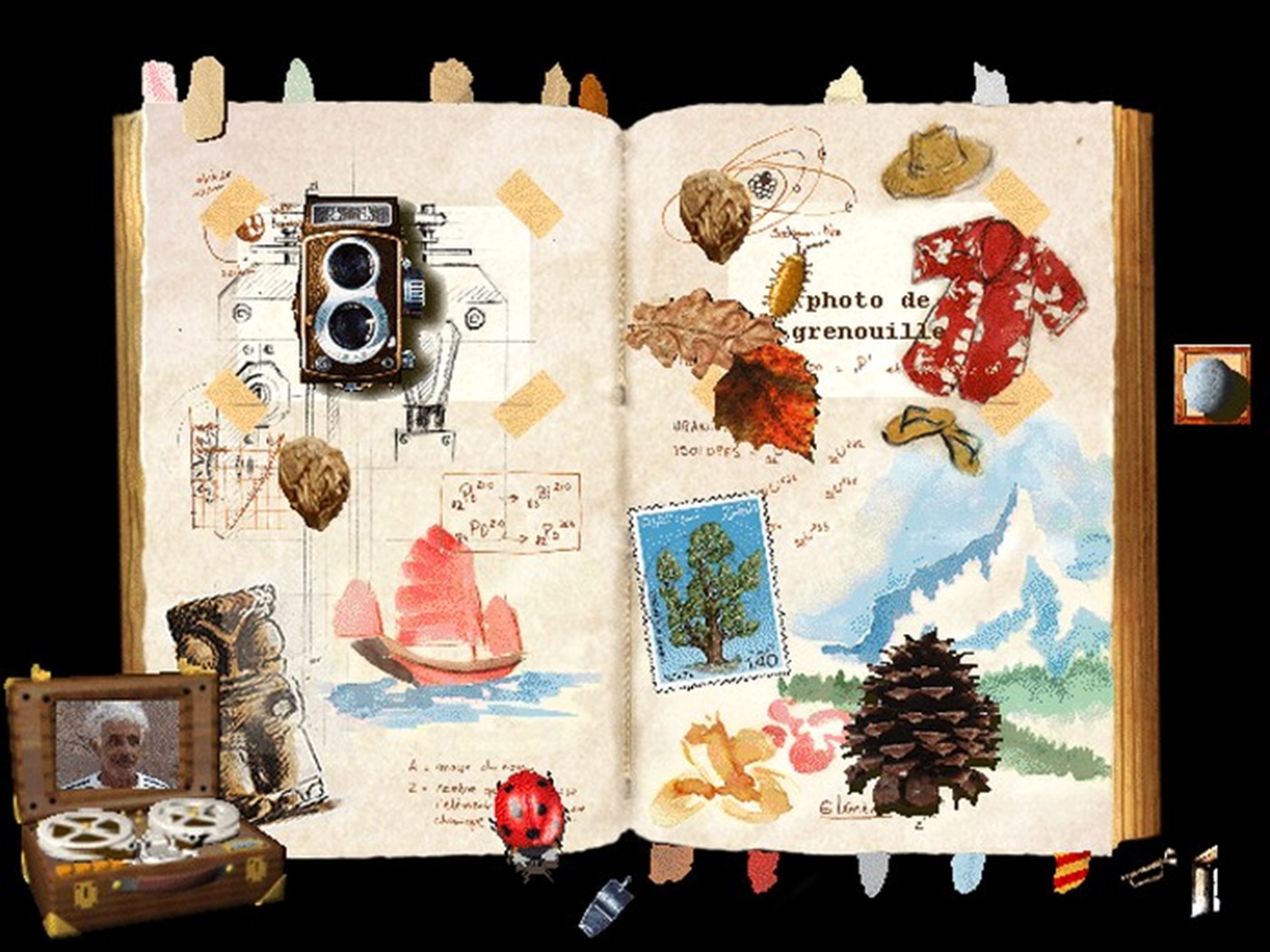
Uncle Ernest’s Secret Album is a point’n’click game that, as the name suggests, takes place entirely inside a notebook. Each page is a micro-universe unto itself, much like a travel journal filled with notes, drawings, and small objects. The goal of the game is to find the treasure hidden by Uncle Ernest inside the album by collecting seven figurines through solving puzzles and mini-games.
Visually, the game has a very distinctive feel, its almost “plastic” look, combined with video elements, feels like a real treasure. And the decision to feature a real Uncle Ernest, with actual footage of real people, pulled the world out of the purely virtual and made it feel like something that could genuinely exist.
I only recently found out that there’s a making-of video for the game (in French), which I really enjoyed because you can tell that the creation process itself was just as wholesome, almost magical, thanks to the encounters they made along the way.
I truly believe it’s one of the most wonderful games I’ve ever played; it will always be my madeleine de Proust.
Forestia (1998)
Forestia is also an old edutainment CD-ROM game presented as an adventure/walking sim where you explore a forest through various chapters, with the goal of raising children’s awareness of nature and the environment.
That’s what it says on the box. An innocent, family-friendly game. But in reality, this game terrified an entire generation of children, because without any warning, the tone suddenly shifts! No foreshadowing whatsoever.
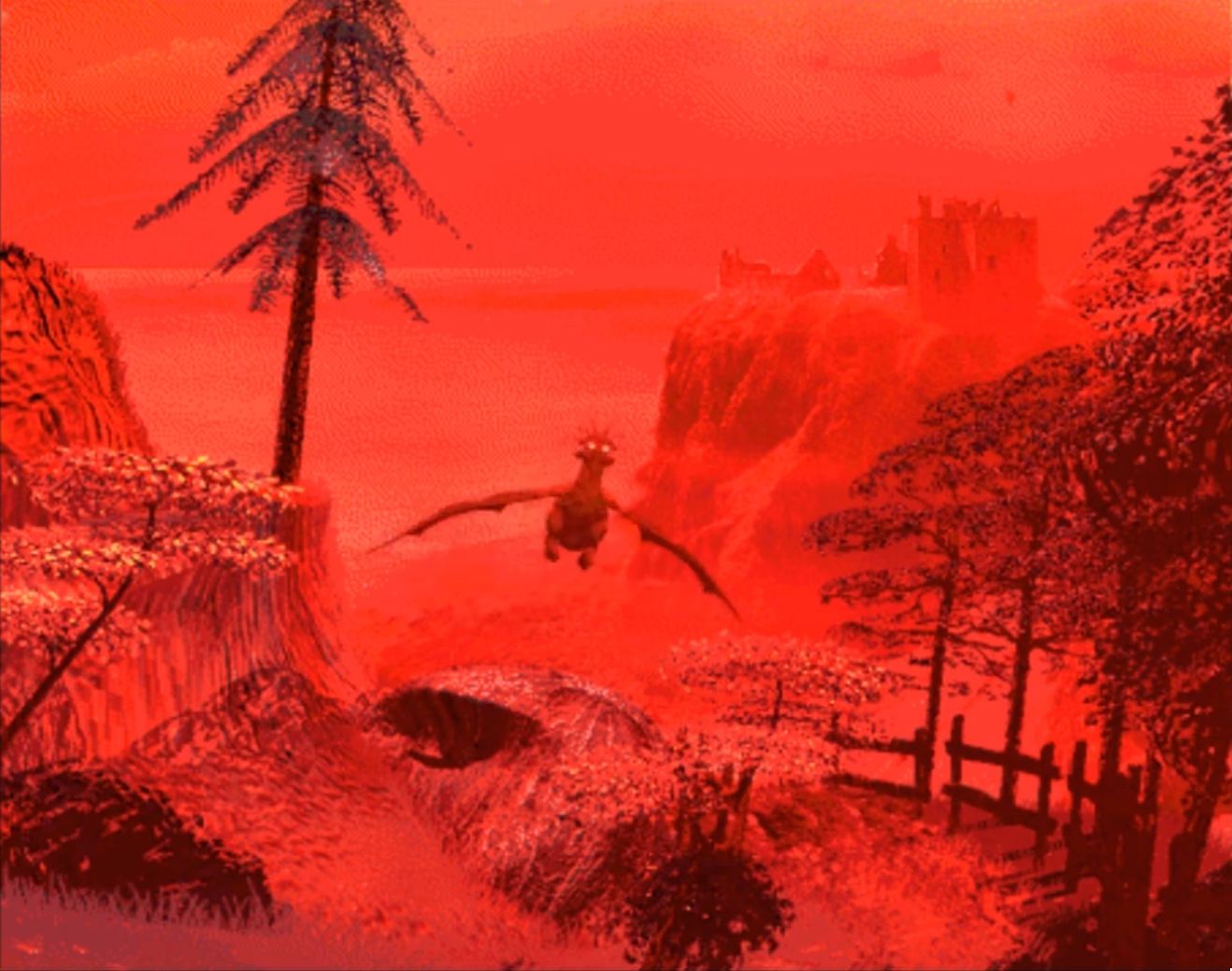
Just imagine: you’re out there taking pictures of animals, putting together your herbarium, stargazing, chatting with Sam the rabbit about constellations and just like that, out of nowhere, you’re in hell.
The entire forest turns red, the soundtrack becomes something extremely frightening, and the animals that have been following us since the start of the adventure are either trapped, have gone mad, or are now dead!! There’s even a glitch that removes the head of a caged animal, making it look decapitated, which spawned a whole rumor mill among kids.
It slowly dawns on you that this is the end of the world, and that you are the only one who can stop it so the forest can go back to the way it was. A heavy burden to bear for the child that you are… And even beyond that specific moment, the whole game has a pretty eerie vibe throughout, strange moments and mini-games that fascinated me just as much as they unsettled me.
The Urbz: Sims in the City - GBA version (2004)
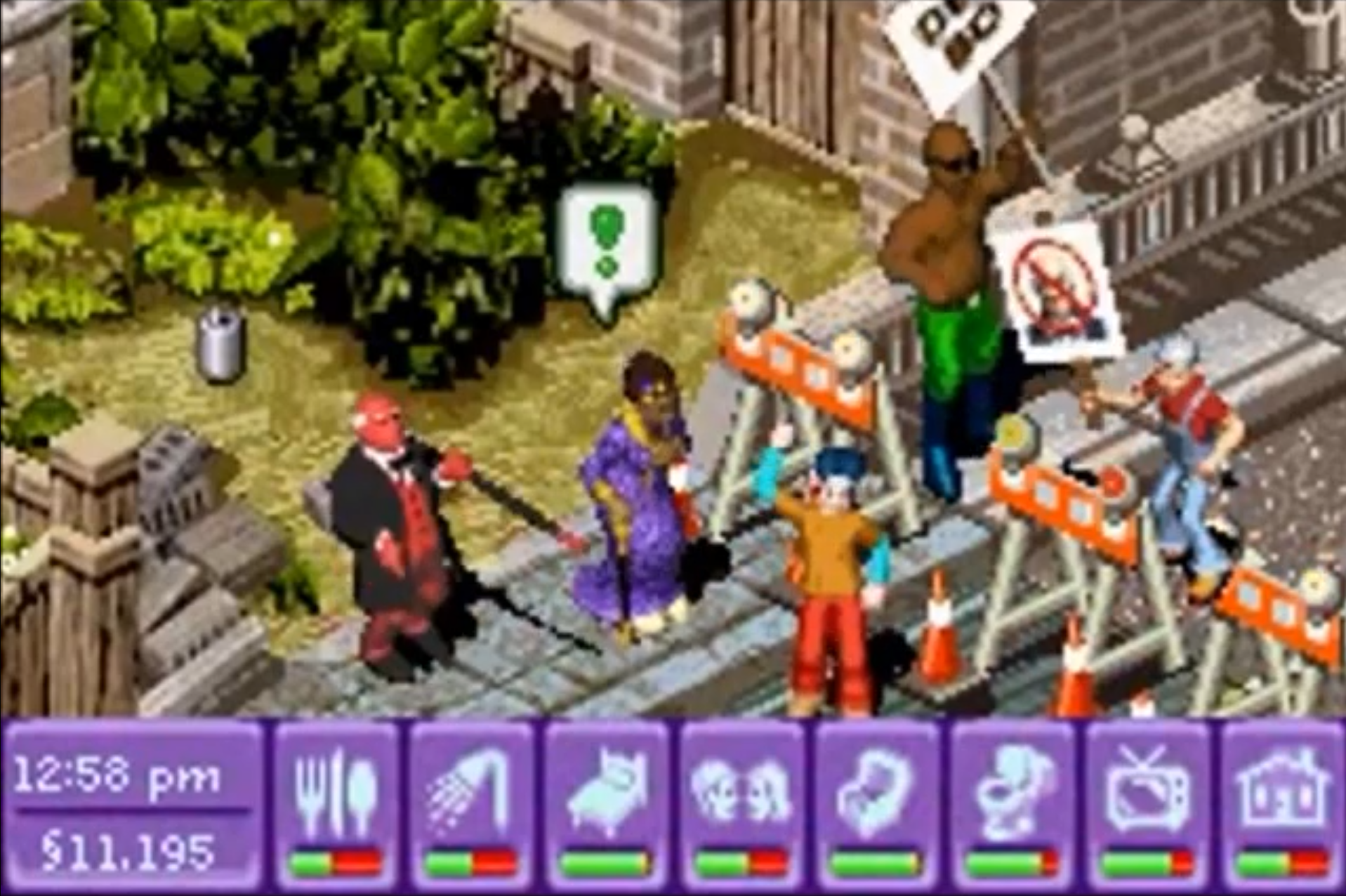
At first glance, this game doesn’t seem political, but it is. It deals with capitalism, megacities, gentrification, and, above all, how to collectively put an end to these forces.
You start the game homeless, secretly squatting in a large office building and working there illegally as a janitor. Very quickly, you discover that the owner of this massive building, a real estate tycoon, plans to buy the entire city in order to turn it into a theme park, displacing all of its inhabitants. After snooping around too much, you’re kicked out and end up in prison.
You eventually get out of prison, and from that point on, your goal is to stop Daddy Bigbucks (yes, that’s really his name) from buying the whole city. To do that, you have to organize, plan a protest, and bring together different social groups: the Streeties, the Nerdies, the Richies, and the Artsies. Each group has its own values and skills, and you have to prove yourself by completing quests for them. In return, they contribute in ways tied to their social position. The Richies help buy back public attractions that were shut down, the Artsies create performances that denounce Daddy Bigbucks’ actions, and so on.
Of course, as a child, I didn’t fully grasp the political depth of the game, but the message still came through in a lighter way, wrapped in a very offbeat universe full of vampires, a talking alligator, a ghost, a magic lamp that lets you shrink, among other things. This was the first game I ever played that focused on gathering people and collective organization rather than individual success. Here’s a great article about The Urbz and gentrification.
The Sims 2 DS (2005)
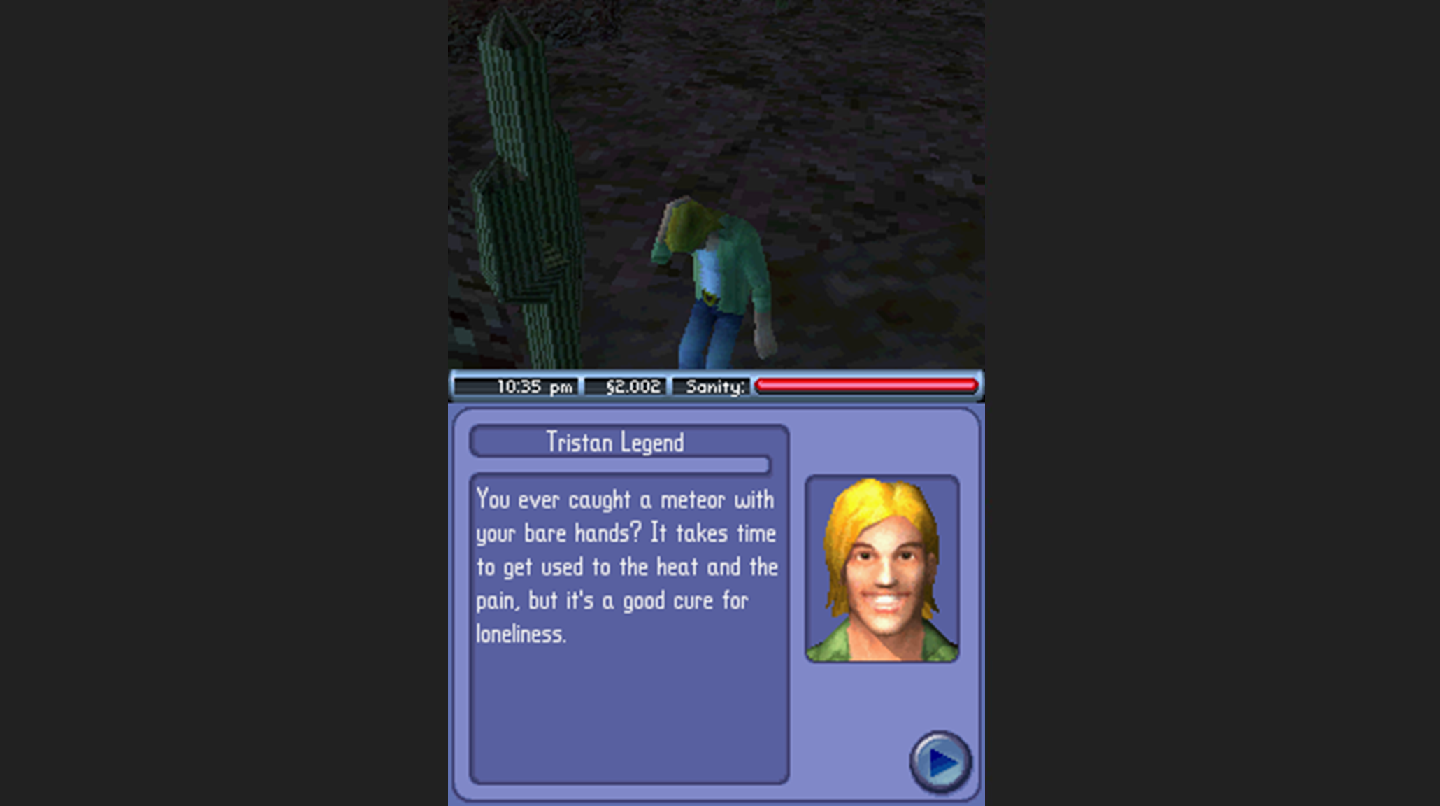
I have an obsession with The Sims 2 DS. Whenever I talk about it with people who don’t know the game (and yes, I talk about it often…), they usually assume it’s just The Sims 2 on the Nintendo DS. That’s exactly what I thought too when I got it as a kid! Absolutely not. It feels like a fever dream, and even today I still wonder what the design meetings for this project must have been like.
The Japanese title is The Sims 2: Hachamecha Hotel Life. “Hachamecha” means “absurd” or “nonsensical,” which already gives a much clearer idea of what the game is really about.
The game takes place in a small town near the desert. The player character, our Sim, has car trouble and ends up stranded there. An old man offers to fix the car and points us toward a hotel where we can stay while it’s being repaired. But as soon as we arrive, the receptionist tells us there’s a message waiting for us: a letter from the hotel’s former manager, who left the day before. The letter says that everything happens for a reason, and that we are now the one meant to run the hotel. As if the car breaking down wasn’t just an accident.
From there, the game asks you to improve the hotel while completing quests for its guests. And this is where things get truly unhinged. There’s a desert surrounding the town that literally drives you insane if you stay there too long, a cow cult, a secret basement where you can become a “rat hero” and fight villains, Bigfoot, the implication that mole men exist deep underground, aliens invading because of a time paradox if you change the DS clock, townspeople who go insane and need to be calmed down, and more.
I have to stop here, otherwise this would turn into a full article just about The Sims 2 DS. There’s actually an excellent blog that goes in depth into all the madness of this game.
I don’t know if someone discovering it today would be as affected as the generation of young players who were all misled at the same time by a deceptive title and thrown into a world so strange it feels like purgatory. My dream is to make a game one day that feels just as eerie as this one, while still being clear about its goals and I find that kind of design strangely difficult to pull off!
Harvest Moon DS (2005)
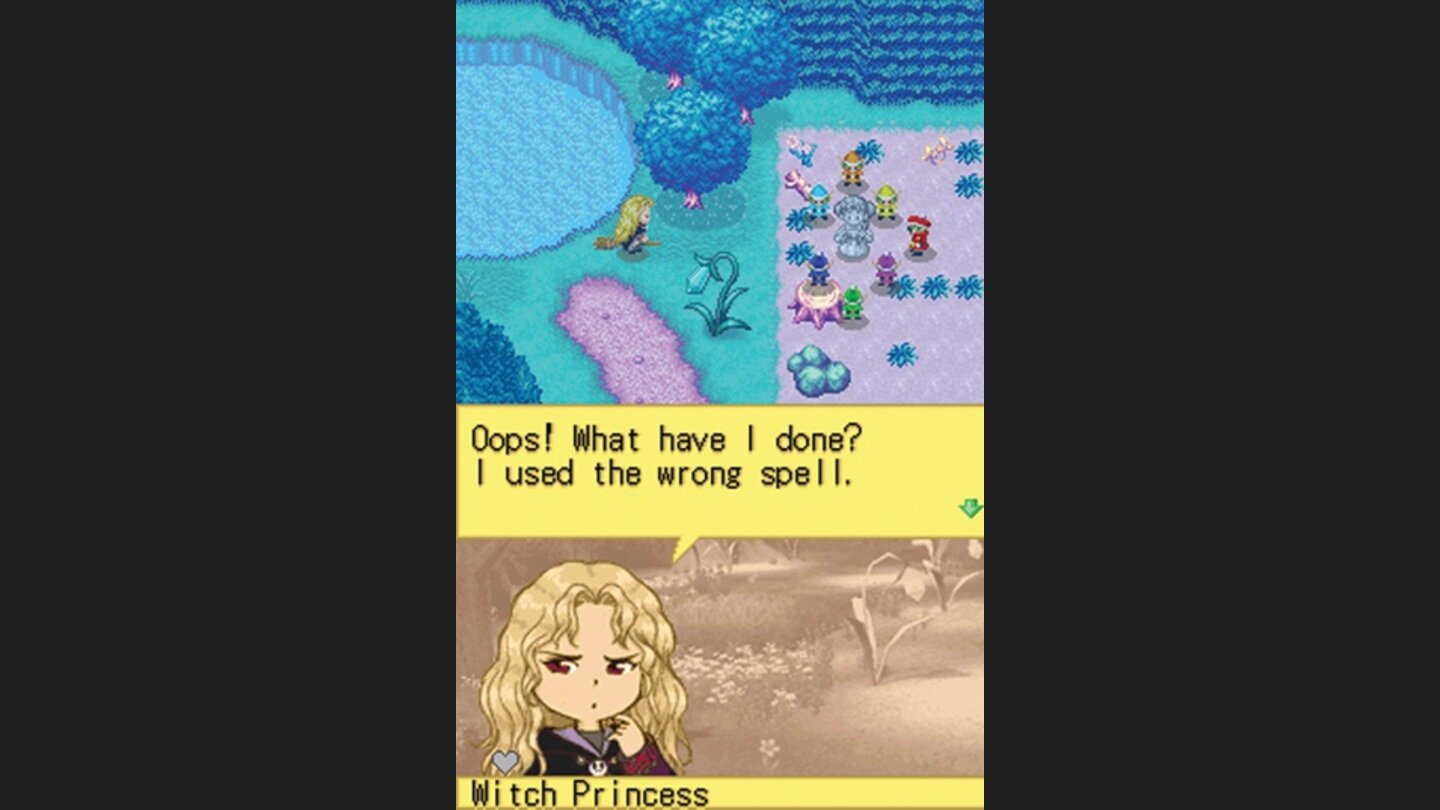
The first farming game I ever played. And even though it was extremely difficult (I never found all the elves, never brought back the Harvest Goddess, and didn’t even unlock the town), I absolutely loved it because the game was full of mysteries and had a strange edge to it. It starts right in the opening, where your dog can kill the mayor and immediately roll the credits. That really sets the tone.
I later learned that you can actually kill all the townspeople by poisoning them with toxic mushrooms during a huge potluck, which also triggers the credits. You can find a mermaid who is locked in the bathtub of a creepy guy who refuses to let her go, a princess deep in the mine who is asleep and has lost her voice due to a curse, a witch who rewards you for doing bad things like neglecting your health until you pass out, letting your animals die, and experiencing some genuinely disturbing dreams.
Harvest Moon DS, although it could be described as “wholesome” today, has dark sides, secrets, and characters who aren’t always kind, and that’s okay. That’s actually what I criticize in most modern farming sims (not to mention the fact that many of them are copies of copies of copies that don’t try to innovate in any meaningful way). The charm of Harvest Moon DS lies in these rough edges, not in a perfectly smooth world that becomes uncanny because everyone is nice and nothing ever really happens.
One of the joys that came with this game was the community around it: the forums and specialized blogs discussing theories, sharing easter eggs, and digging into its secrets. Strangeness always brings people together, because it creates a desire to talk deeply about what you’ve just experienced.